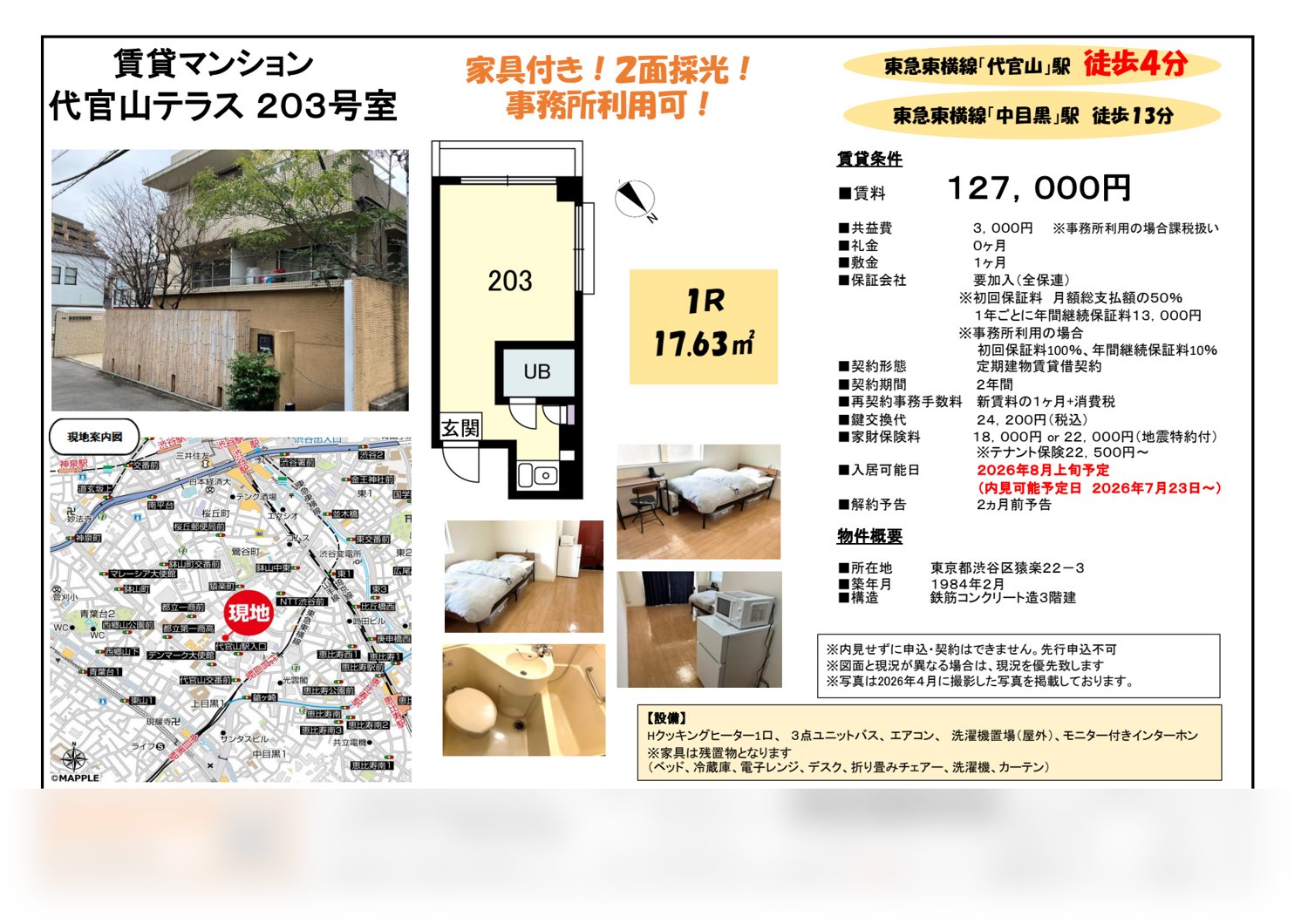
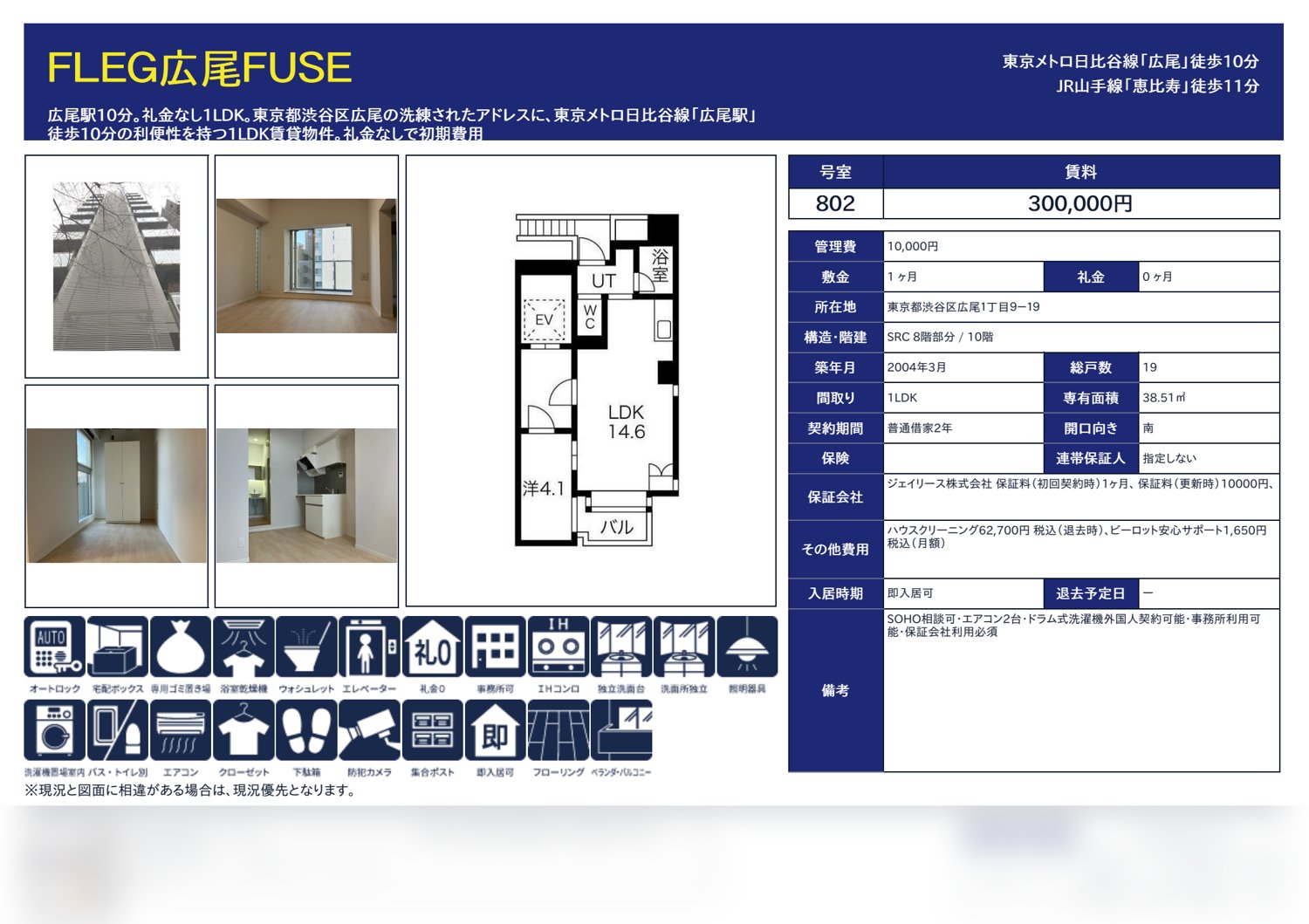
Can you work — or register a company — from a Japanese rental?
"事務所使用不可" does not mean you cannot open a laptop. It means something specific, and it is different from whether you can register a company at the address. Here is the actual distinction.
A listing says 事務所使用不可 — “office use not permitted.” A freelancer reads that and assumes their whole plan is dead. It usually isn’t. But the neighbouring question — can you put your company’s registered head office at this address? — is a different question with a different answer, and people routinely collide the two.
Three separate things are at stake. Untangle them and the listings stop being confusing.
1. Living somewhere and working from it
Almost nowhere in Japan forbids you from doing your job inside your home. Writing code, taking calls, editing, designing, running a shop online — no standard residential lease is trying to stop that, and no landlord is auditing it.
What a lease restricts is use: what the property is contractually being rented for. A residential lease says the use is residence. That framing is what the next two sections turn on.
2. “Office use” (事務所利用) — the thing landlords actually refuse
When a Japanese listing says 事務所使用不可, the landlord is refusing the characteristics of an office, not your laptop:
- Clients and visitors coming to the building. This is the big one. Strangers through the entrance, unfamiliar faces at the lift, deliveries at odd hours. In a residential building this is what other tenants complain about.
- A sign, a nameplate, a listed business address on the building.
- Staff who are not residents.
- Heavier wear — stock, equipment, freight.
So the practical translation is: live here and work quietly, yes. Turn the flat into a place of business the building can feel, no.
This is exactly why we do not use the word “office” in our own copy for the SOHO idea. It over-promises. On our listing pages, Office use is its own field with a per-property value taken from the leasing sheet — Permitted, Not permitted, Registration OK, or Negotiable — because it genuinely differs building by building, and it is the single most useful line on the page for anyone self-employed.
Where we do not have it in writing, the field says Negotiable, which is not a dodge: office use really is a landlord-by-landlord conversation, and “ask” is the honest answer.
3. Company registration (法人登記) — a separate question
You can register a Japanese company at any address. Company law does not restrict where your 本店所在地 (registered head office) is, and the Legal Affairs Bureau will not check your lease when you file.
That is precisely the trap. Registering is easy; being allowed to is a contract question:
The lease and the building’s management rules are what decide it. Where a residential lease or the building rules prohibit office use, registering anyway can be treated as a breach — with liability for damages, or termination of the lease, on the table.
So: legal to file, but potentially a breach of your own contract. The safe move is to ask before you register, and to get a yes in writing. Landlords say yes more often than people expect — especially for a one-person business with no visitors — and some listings advertise it, which is why we carry Registration OK as a distinct value rather than folding it into “office use.”
The consumption-tax wrinkle nobody mentions
There is a reason landlords are careful here, and it is not just noise. In Japan, residential letting is exempt from consumption tax — but only where the contract makes clear the property is being used as a residence.
So changing the contractual use from residence to business moves the letting into taxable territory. That is a real cost and a real administrative change on the landlord’s side, which is why some will negotiate happily and others refuse flatly. Knowing why the refusal exists makes the conversation much easier to have.
What to actually check before you sign
- The listing sheet’s 事務所使用 line. Permitted / not permitted / negotiable. It is usually there in the conditions table.
- Whether the building is 居住専用 (residential-only) in its management rules. A landlord can be willing and still be overruled by the building.
- Whether you need visitors. If clients will come to you, you are looking for genuine office-use permission, not a workaround. Be direct about it — hiding it and getting caught is far worse than being told no.
- Whether you need registration. Say it at the application stage, not after. It is a normal request.
- What “SOHO OK” means on that particular sheet. It is not a regulated term. Sometimes it means full office use; sometimes it means “live here and work, quietly, alone.” Ask which.
Where this leaves you
If you are one person with a laptop and no visitors, most of the market is open to you and you should stop worrying about 事務所使用不可 on an otherwise perfect flat — but do ask, because the answer costs nothing.
If you need a registered address, a nameplate, or clients at the door, the market narrows sharply and you should filter for it from the first day of your search rather than discovering it at contract stage.
That second group is why this site exists. Every listing here shows its office-use status as a field, taken from the leasing sheet rather than guessed at, and where a landlord will accept company registration we say so.
This is a general explanation of how things work in practice, not legal or tax advice. Terms vary by property, landlord and guarantor company. Always check your own case with us.